Tic-tac-toe for kids: the first strategy game
Tic-tac-toe, or noughts and crosses, is where most children first discover that a game can be thought about. Dotty draws red crosses, Bo draws blue noughts, and every line wobbles like real pen on lined paper.
Play tic-tac-toe now, free →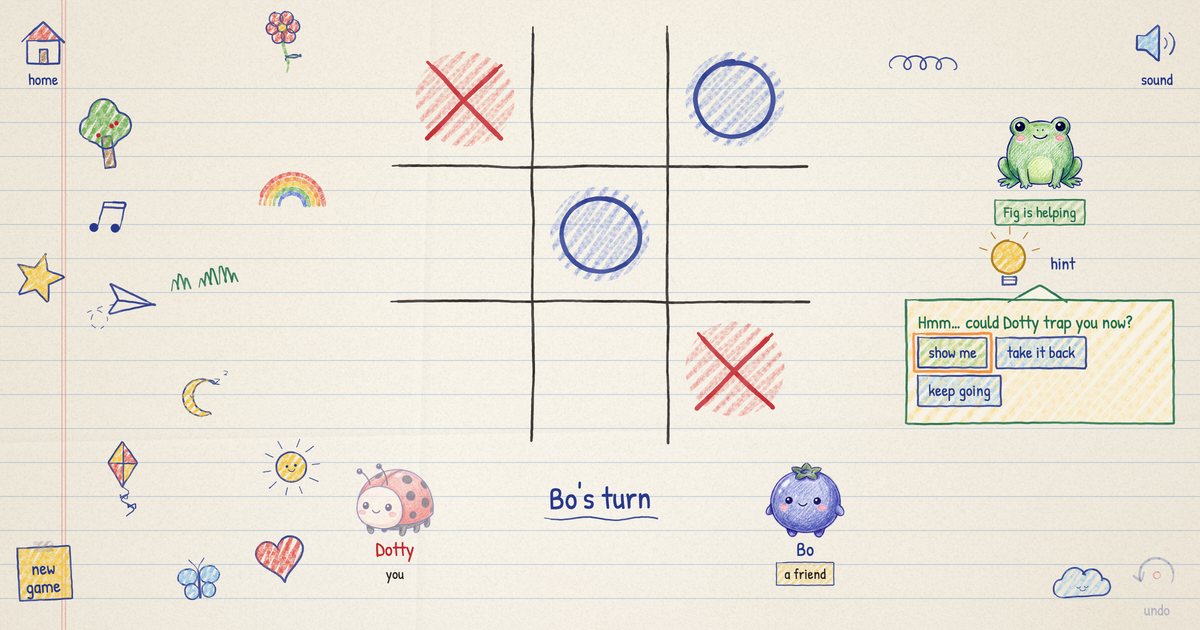
The four big ideas Fig teaches
- Win if you can: look for two of yours in a row.
- Block if you must: spot the other player’s two in a row.
- Make a fork: one move that makes two ways to win, so the other player can only block one.
- Stop their fork before it happens.
Strong squares
The middle square is part of four lines, each corner three, each edge two. Fig’s tips explain why the middle is a strong start, and why, when nobody makes a mistake, tic-tac-toe always ends in a draw.
Three levels
One star wanders and forgets to block, so new players can win. Two stars always blocks, but falls for a fork. Three stars never loses: can your child hold it to a draw?
Questions grown-ups ask
What age is tic-tac-toe for?
From about four. Tap a square to play. Fig’s hints are short, and tapping Fig reads them aloud for children who aren’t reading yet.
Can you always win at tic-tac-toe?
No. If neither player makes a mistake, every game is a draw. The fun is learning not to make mistakes, and spotting it when the other player does.
Is it the same as noughts and crosses?
Yes: tic-tac-toe is the American name and noughts and crosses the British one.
More games on Trickly
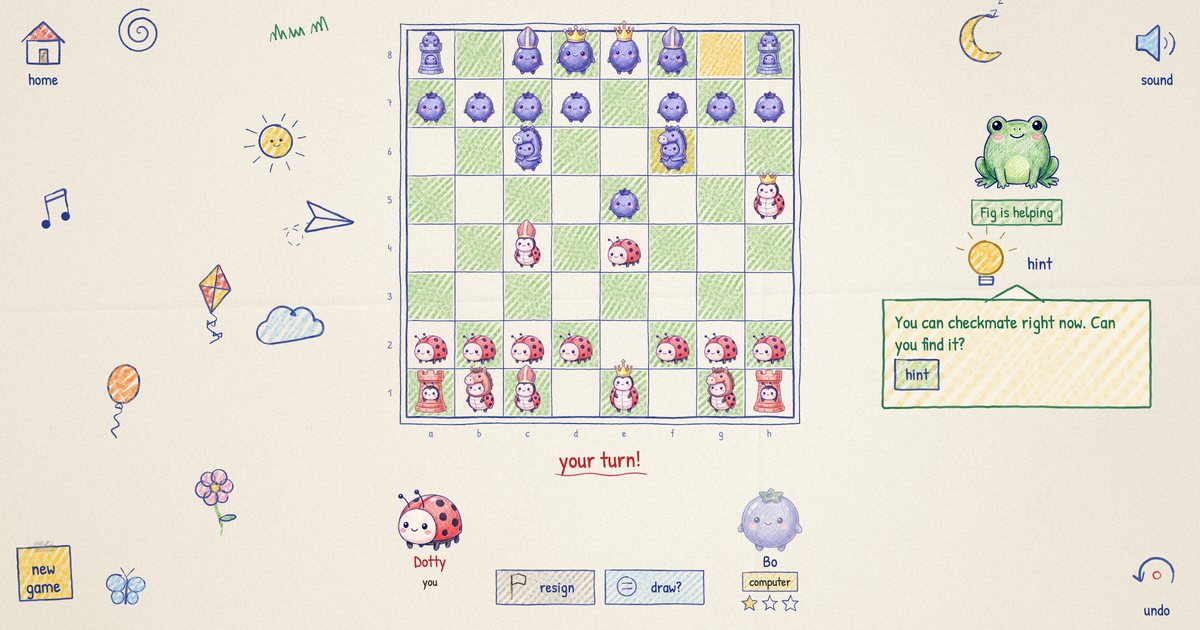 ChessLadybirds versus blueberries, with a coach who spots danger. Ages 6+.
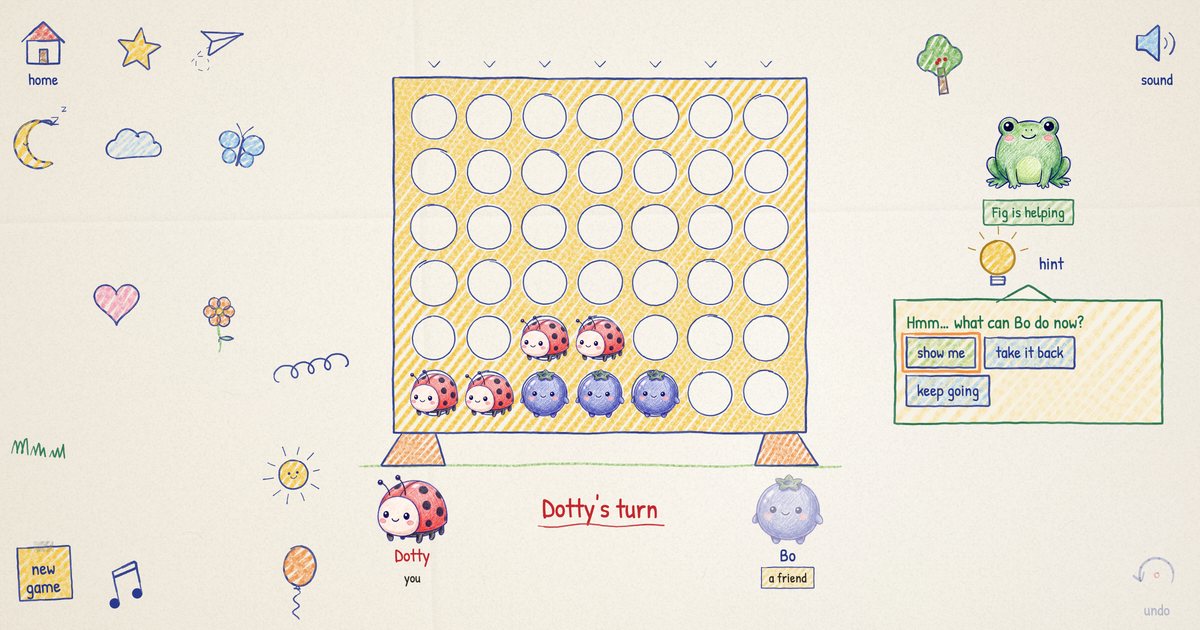 Four in a RowDrop counters, line up four, and learn to look up before you drop. Ages 5+.
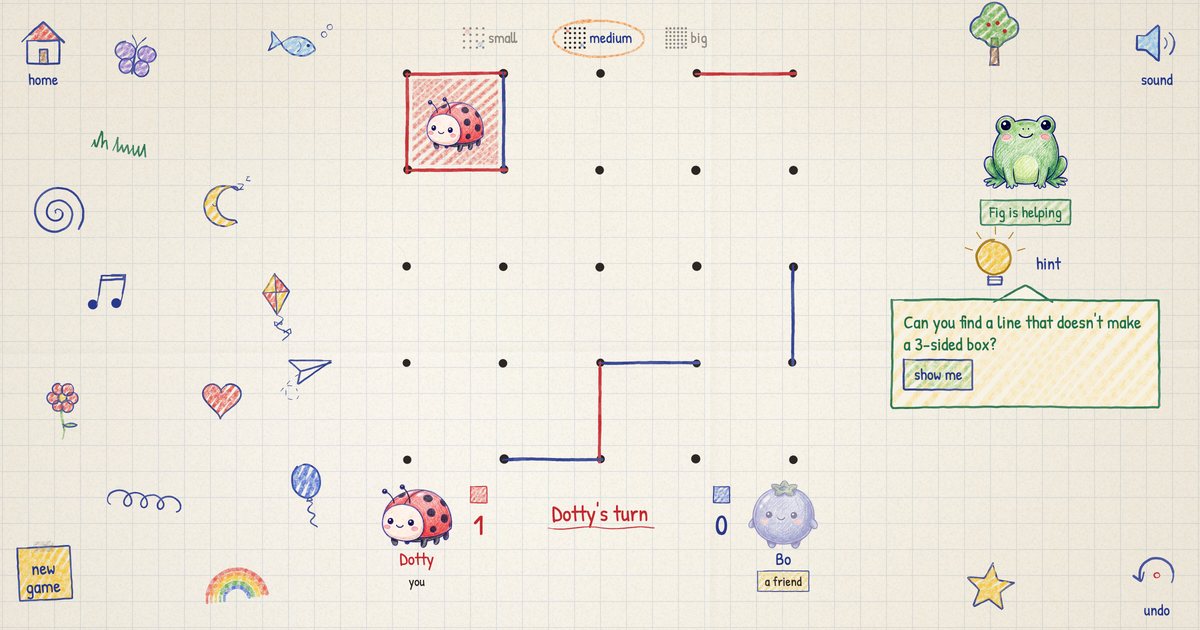 Dots & BoxesThe pen-and-paper classic: close boxes, and learn the chain tricks. Ages 6+.
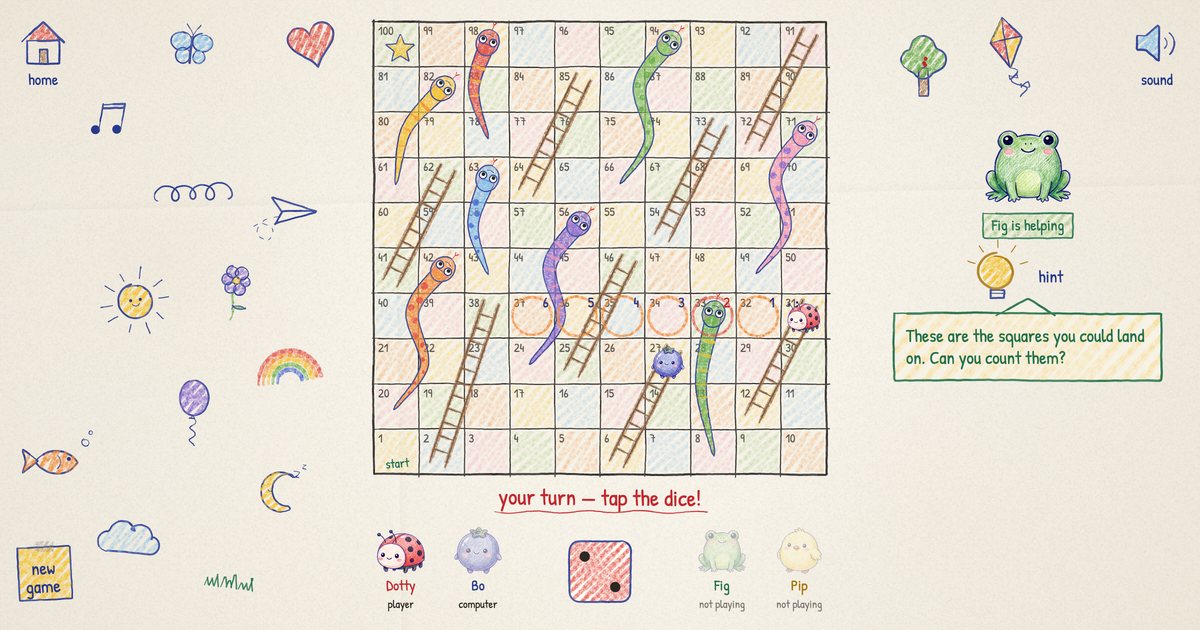 Snakes & LaddersClimb up, slide down, and count every hop. Ages 4+.