For teachers
Trickly works in a classroom with nothing to set up: no logins, no student data, no ads. Open trickly.com on any tablet, Chromebook or computer, and play.
Classroom-friendly
- No accounts, sign-ins or student data.
- No ads, chat or links out to other games.
- Works offline after the first visit, which helps on patchy school Wi-Fi.
- Runs in any modern browser: iPad, Chromebook, Windows, Mac and Android.
- Pairs can play each other on one device.
Thinking skills to talk about
- Tic-tac-toe: threats, blocks and forks, and why perfect play always draws.
- Four in a row: looking ahead (“look up!”) and making two threats at once.
- Dots and boxes: giving away as little as possible, and counting chains.
- Chess: protecting pieces, spotting checks and captures, planning.
- Snakes and ladders: counting to 100, and luck versus skill.
Using Fig in lessons
Fig’s questions are the ones good players ask themselves: Can you win now? What is the other player planning? Is anything in danger? Try asking pupils to say Fig’s question out loud before each move. For a tournament or assessment, tap “Fig is helping” to let Fig nap.
A five-minute starter: in pairs, play tic-tac-toe against the three-star computer. Can anyone beat it? Why not?
The games
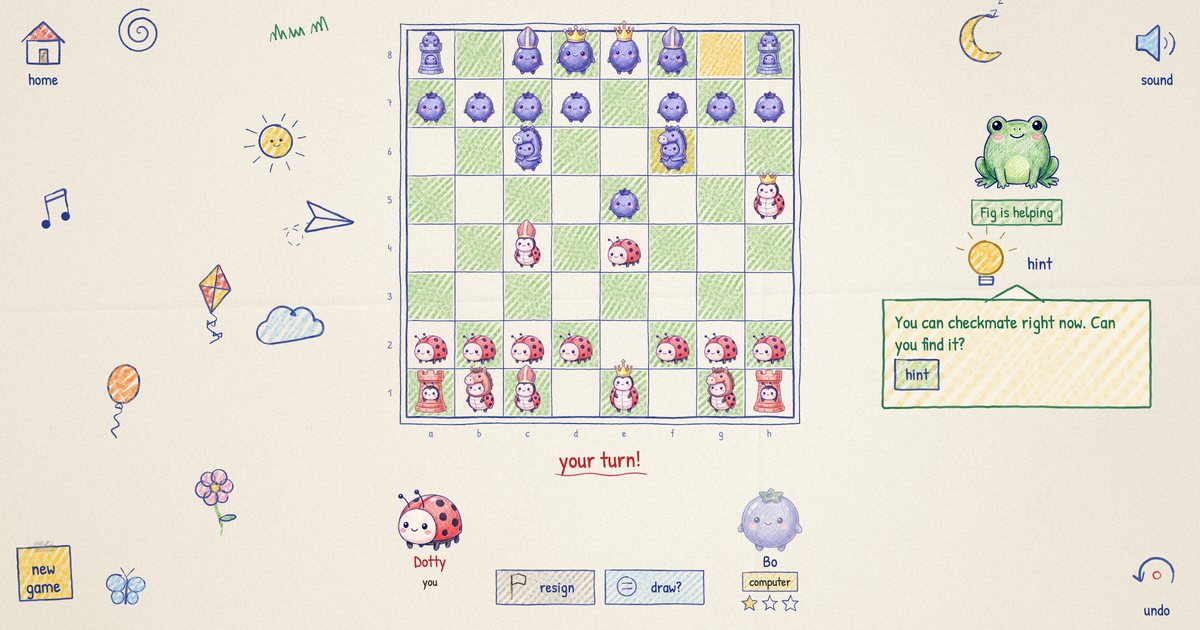 ChessLadybirds versus blueberries, with a coach who spots danger. Ages 6+.
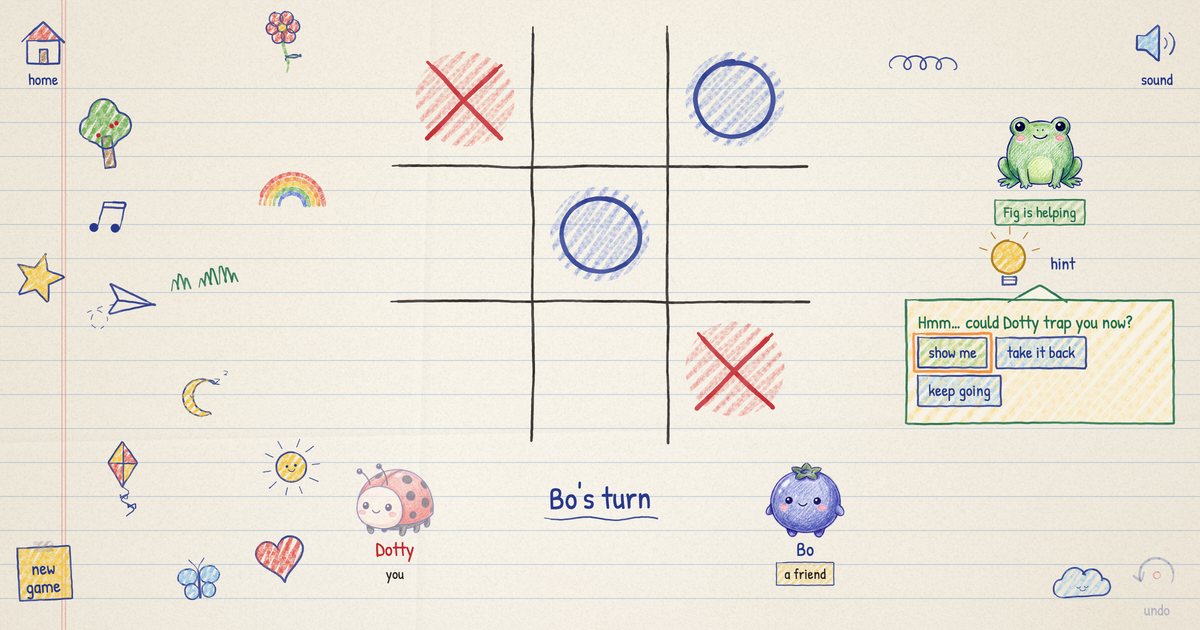 Tic-tac-toeThe first strategy game: win, block, and learn the fork. Ages 4+.
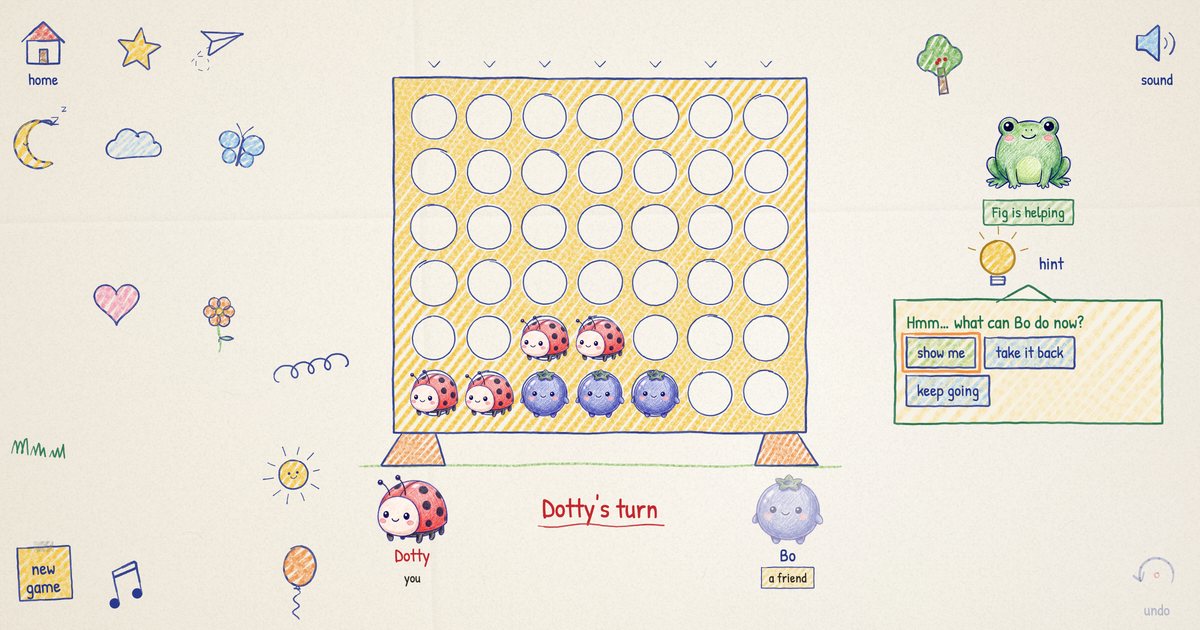 Four in a RowDrop counters, line up four, and learn to look up before you drop. Ages 5+.
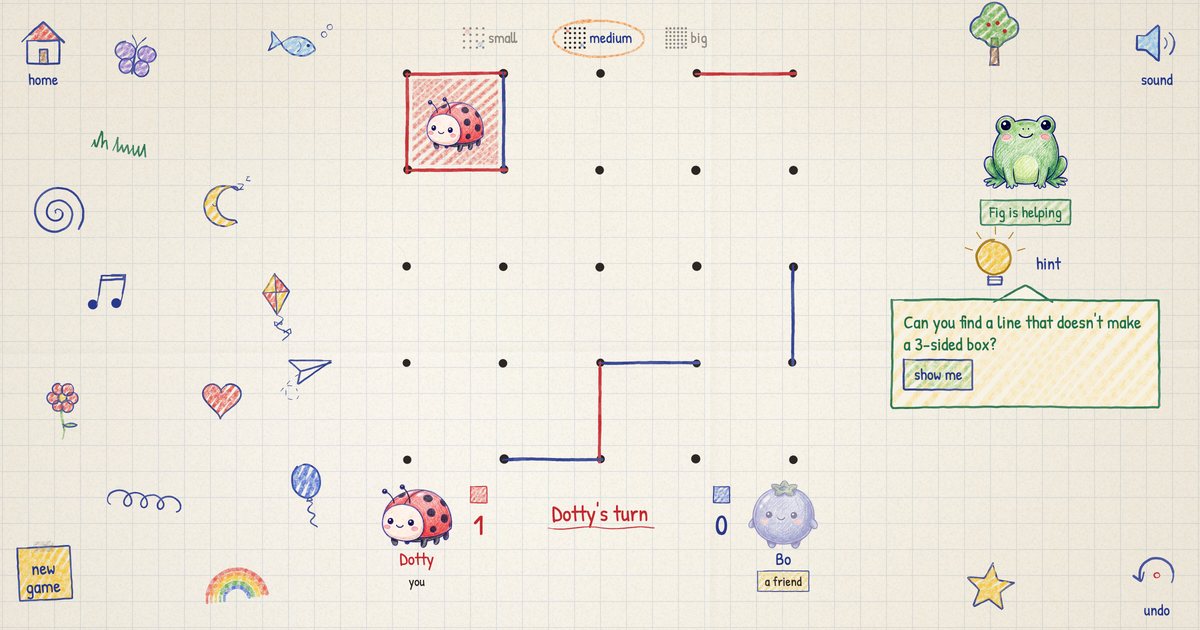 Dots & BoxesThe pen-and-paper classic: close boxes, and learn the chain tricks. Ages 6+.
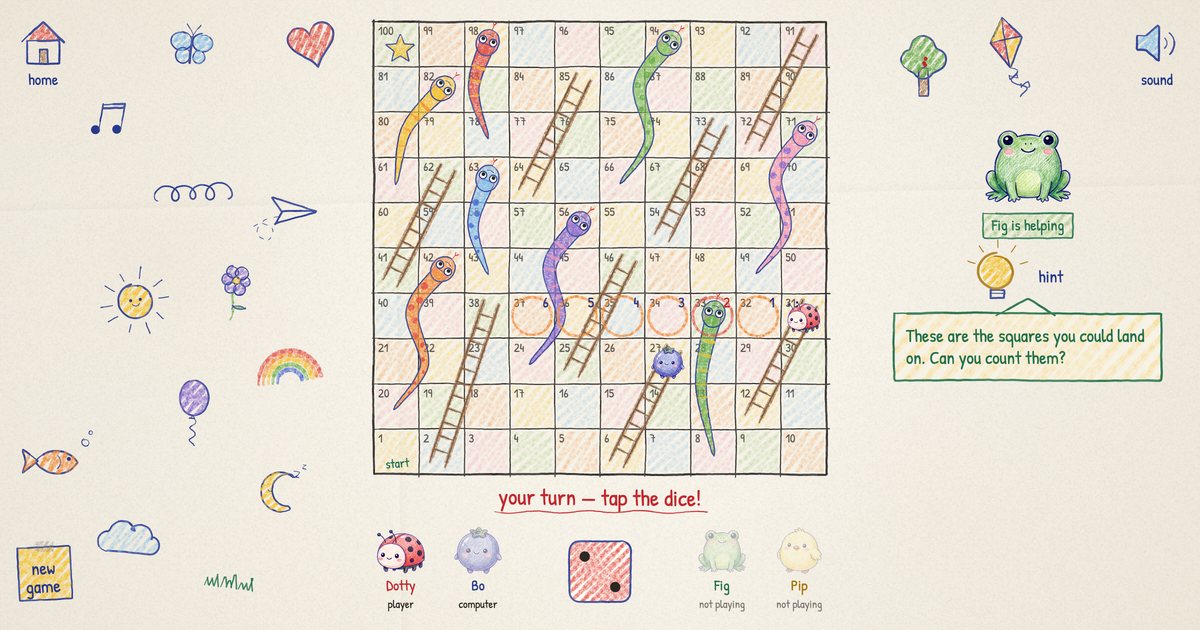 Snakes & LaddersClimb up, slide down, and count every hop. Ages 4+.